
Every senior engineer hits a moment where this question shows up. You have been writing strong code for several years. You are trusted on your team. Someone in leadership starts hinting that you could lead people. Or maybe a manager role opens up and a peer asks if you are going to apply for it.
The pressure to take the manager track is real, especially in tech where the title still carries social weight. But choosing wrong here can cost you years of frustration. The wrong path slows your growth, drains your energy, and pushes you toward a career that does not fit who you actually are.
Here is how to think through this decision properly, without the noise that usually surrounds it.
The first problem is that most people imagine these tracks based on rumors and assumptions, not based on what the work actually feels like day to day.
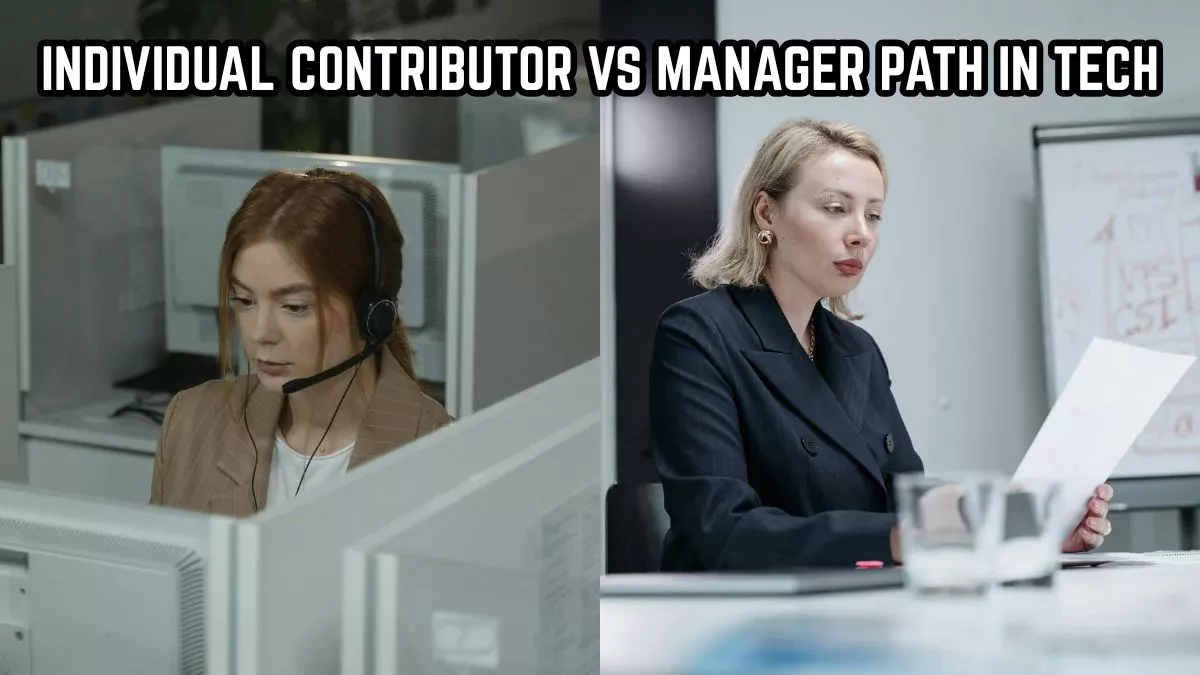
The IC path, especially at senior and staff levels, is about technical depth and influence. You spend your days designing systems, reviewing critical changes, mentoring engineers informally, debugging production issues, and shaping the technical direction of your team or org. You write code, but you also write documents that other people implement. The higher you go, the more your impact comes from your judgment, your taste, and your ability to make complex things simple.
The manager path is about people and outcomes. Your day is filled with one on ones, planning sessions, hiring loops, performance discussions, cross team meetings, and a lot of writing. Your impact comes through your team. If your engineers ship great work, you succeeded. If they leave or burn out or underperform, you are the one accountable.
These are genuinely different jobs. They pay similarly at most strong companies. They take similar amounts of energy. But the energy goes into completely different things, and that difference matters more than the title on your LinkedIn profile.
The most useful framing comes from asking yourself a few honest questions. Sit with these for a few days. Do not answer too quickly.
When you reflect on your best day at work in the last six months, what made it great? Was it solving a hard technical problem? Or was it helping a teammate get unstuck on something they had been struggling with for weeks? Was it shipping something elegant? Or was it watching a project come together because you organized the moving parts?
When you imagine yourself five years from now, what does the work look like in detail? Are you the person leading a deep technical investigation, or the person leading a team through a tough quarter? Both are valuable. They are not the same.
When you read about senior IC accomplishments, like designing a major system or scaling something to millions of users, do you feel envy or admiration? Same question for managers who built strong teams. Where does the envy live? That signal is more reliable than almost any framework.
These questions sound soft, but they are more useful than career frameworks. Most people know what they want when they let themselves answer honestly without judgment.
If you are stuck, working through this decision with an experienced mentor is one of the most efficient ways to get clarity. They have seen hundreds of people make this choice and can usually spot the pattern in your situation faster than you can.
There is a common myth that the manager track pays better. This is mostly false at strong tech companies in 2026. Senior staff and principal IC roles at FAANG and equivalent companies often pay as much or more than senior manager roles. The principal and distinguished levels can match director compensation packages.
The myth survives because at smaller companies and outside tech, manager titles do come with more money. But if you are in a mature tech company with a real IC ladder, the financial argument for management is weaker than people assume.
What changes is the shape of compensation. Manager comp tends to be steadier and more political, since your performance is tied to your team. IC comp tends to be more variable and tied to specific impact you can point to in a written promotion case.
This is where most career advice fails people, because it treats every engineer as if they have the same wiring. They do not.
Some people are energized by talking to other people all day. Conversations recharge them. Conflict, while uncomfortable, does not drain them deeply. They naturally pay attention to team dynamics and notice when someone is off. For these people, the manager path can feel like coming home after years of doing work that did not fully use what they were good at.
Other people get drained by sustained social interaction, even when the conversations are good. They need long blocks of focused time to feel productive. They love going deep on a problem and not surfacing for hours. For these people, management can feel like a cage, even if they are technically good at it.
Neither type is better. But pretending the difference does not exist sets people up to fail.
The transition from IC to manager is one path, but the transition back from manager to IC is just as real and far more common than people admit publicly. Many strong engineers try management for a year or two, learn from it, and return to IC work with no shame at all. The story of someone going back to IC after management is now a normal career arc, not a setback.
The IC path has gotten more interesting in the last few years, especially with how AI tools have changed engineering work. The companies that need deep technical thinkers, especially in AI, ML, infrastructure, and distributed systems, are paying serious money for senior individual contributors who can think clearly about hard problems.
At the same time, the manager role has gotten harder. Layoffs have flattened orgs. Many companies cut middle management first when budgets tighten. Managers are expected to take on bigger teams with fewer resources. The job is more demanding than it was five years ago.
This does not mean the manager track is a bad bet. Strong managers are rare and highly valued. But it does mean the comfort assumption, that management is somehow safer or easier, is no longer true.
For people leaning toward technical leadership without management responsibility, exploring technical leadership opportunities and senior IC roles is worth doing seriously. The path is more legitimate now than it was even three years ago.
The best way to test the manager path is to do parts of the job before you take the title. Mentor someone formally. Run a small project. Step in when your manager is on leave. Notice how you feel after a week of meetings versus a week of coding. Notice what drained you and what energized you.
This kind of low risk experiment tells you more than any framework. If you hate the meetings, you have your answer. If you love the moment a teammate succeeded because of your guidance, that is a strong signal in the other direction.
For those evaluating the manager track seriously, running a few mock interviews for management roles will tell you fast whether the questions energize you or drain you. Building a clear career roadmap around your real preferences also helps avoid second guessing yourself a year from now when the work gets harder.
For deeper guidance through this decision, betopten.com hosts mentors who have spent careers on both tracks and can help you make this call without rushing it or letting outside pressure decide it for you.
Both paths are good. Both paths can take you to senior leadership and meaningful work. The wrong path is the one you take because you felt you should, not because you wanted to. Choosing well now saves years of effort later.
Take the time to answer the question honestly. The right track for you is the one where the daily work feels like it fits, even on bad days. That fit matters more than the title, more than the money, and more than what your peers happen to be doing. Your career is long. Spend it doing work that uses what you are actually good at.